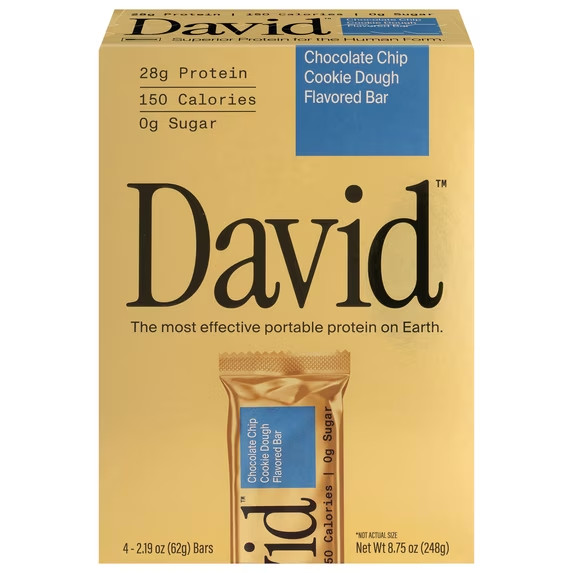

Photos from current listings. Actual item, color, and included accessories may vary.
David High Protein Bars Buying Guide
David High Protein Bars are a niche protein snack built around a cookie-dough-style core with 28g of protein per bar, positioning them between a candy bar and a meal-replacement bar. The primary trade-off is protein density versus sugar-alcohol load and texture: high-protein bars rely on fiber syrups and sugar alcohols that can cause digestive discomfort and a chalky mouthfeel, while lower-protein bars taste better but underdeliver on macros. The decision rule is simple—buy David bars only if you need 28g protein in a single compact bar and tolerate sugar alcohols; otherwise choose a whole-food or lower-protein bar with cleaner ingredients.
Key takeaways
- 28g protein per bar is roughly 50-60% of a 150-lb adult's daily protein target, putting these in the high-density tier above typical 15-20g bars.
- Most high-protein bars in this class use whey or milk protein isolate blended with collagen or soy, plus sugar alcohols (maltitol, erythritol) and soluble corn fiber for binding.
- Cookie-dough texture requires a fat phase (palm kernel or sunflower oil) and humectants (glycerin) that add 200-300 calories per bar—check total calories, not just protein.
At a glance
- Category
- Protein Nutrition
- Status
- Listings available
- Last updated
- Nov 27, 2026
Current offers
Highlights
- 28g protein per bar is roughly 50-60% of a 150-lb adult's daily protein target, putting these in the high-density tier above typical 15-20g bars.
- Most high-protein bars in this class use whey or milk protein isolate blended with collagen or soy, plus sugar alcohols (maltitol, erythritol) and soluble corn fiber for binding.
- Cookie-dough texture requires a fat phase (palm kernel or sunflower oil) and humectants (glycerin) that add 200-300 calories per bar—check total calories, not just protein.
- Bars with 28g protein typically weigh 60-90g and deliver 200-300 kcal, so protein density is 30-45% of calories; below 30% means the bar is a candy bar with protein marketing.
Best use cases
- Best fit: post-workout or meal-skip snack when you need 25-30g protein fast and have no shaker—pick the 28g bar, not a 15g 'protein cookie'.
- Wrong fit: daily digestive-sensitive buyers—sugar alcohols above 10g per bar commonly cause bloating; choose a bar with 5g or less sugar alcohol.
- Best fit: travel and desk-drawer backup—individually wrapped 60-90g bars survive heat better than coated bars; skip chocolate-coated bars in summer shipping.
- Wrong fit: clean-label shoppers—if you want 5 ingredients or fewer, a high-protein bar with isolates and syrups will not qualify; choose a nut-and-fruit bar instead.
Buying tips
- Check protein source first: whey isolate plus milk isolate gives a complete amino profile; collagen-heavy bars are incomplete proteins and should not count as your primary protein.
- Compare protein-to-calorie ratio: 28g protein in 250 kcal is 45%—excellent; 28g in 350 kcal is only 32% and closer to a candy bar with added protein.
- Count sugar alcohols (maltitol, sorbitol, erythritol) per bar; above 10g, start with half a bar to test tolerance before buying a multi-pack.
- Verify bar weight and count: a '4 count' box at 60g per bar gives 240g total product; compare cost per gram of protein, not cost per box.
Specs
| Protein Per Bar | 25-30g (high-density tier) |
|---|---|
| Protein Source | Whey/milk isolate vs collagen blend |
| Sugar Alcohol Load | 5-15g per bar (tolerance-dependent) |
| Calorie Density | 200-300 kcal per 60-90g bar |
Alternatives to compare
Related searches
What to check before buying
- Confirm the bar is stored below 75°F / 24°C—high-protein cookie-dough bars with oils soften and oil out in hot cars or warehouses.
- Check allergen statement: most 28g bars contain milk and soy; whey-based bars are not dairy-free and collagen bars may still contain milk.
- Verify the count and net weight per bar (typically 60-90g) so you know if '4 count' means four 60g bars or four 90g bars—protein per bar is fixed at 28g.
- If shipping internationally, confirm the bar is shelf-stable at ambient temperature and does not require refrigeration; most are, but coated variants sweat.
FAQ
Data sources: eBay / Amazon listings and product attribute feeds. Updated Nov 27, 2026.
Some links on this page are affiliate links. If you buy after clicking one, we may earn a commission at no extra cost to you. This does not change which products appear here or their order. Affiliate disclosure.