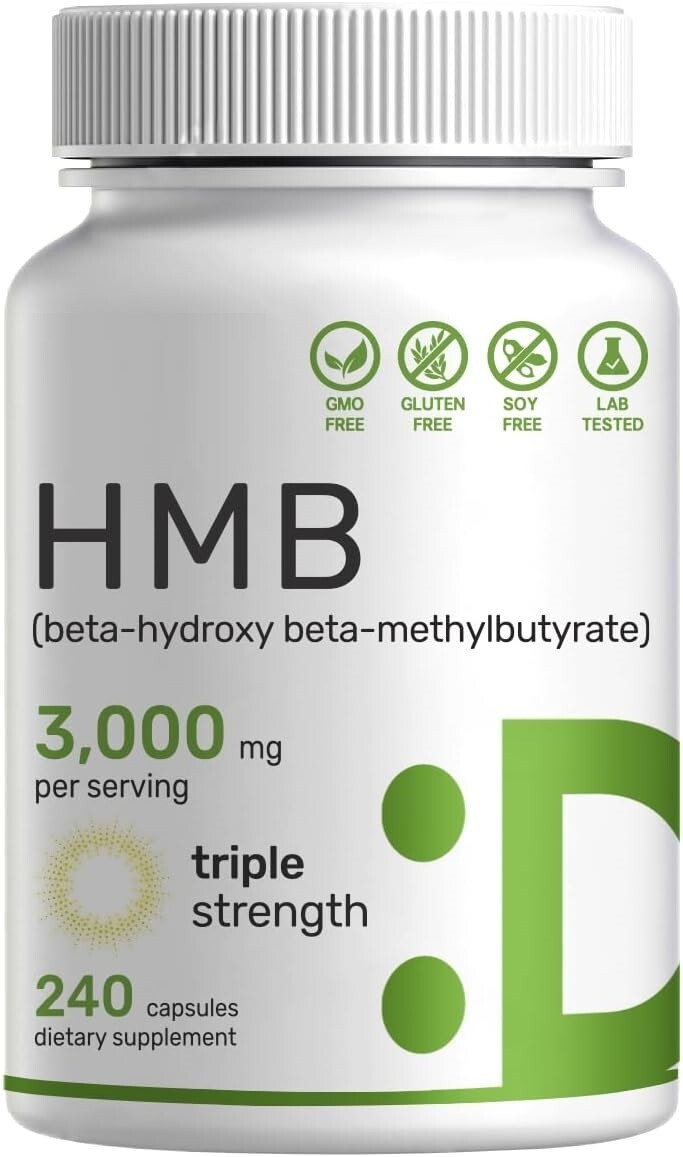

Photos from current listings. Actual item, color, and included accessories may vary.
Muscle Growth Supplement Buying Guide
Muscle growth supplements are concentrated nutritional compounds—creatine, HMB, beta-alanine, and protein isolates—that support hypertrophy when paired with progressive resistance training. The core trade-off is between clinically effective doses of branded, patented ingredients and underdosed proprietary blends that cut costs at the expense of results. The decision rule: pick products that disclose exact grams per active ingredient and third-party testing, and skip any label that hides doses behind a blend or relies on a single mega-dose capsule claim.
Key takeaways
- Creatine monohydrate is the most evidence-backed muscle growth supplement; 3–5 g daily saturates muscle stores, with micronized Creapure grade reducing GI upset.
- HMB is effective at 3 g daily (often split 1 g three times), typically as calcium HMB or the more potent free-acid HMB; lower doses in capsule blends are usually underdosed.
- Beta-alanine raises muscle carnosine and improves training volume at 3.2–6.4 g daily; the harmless paresthesia (tingling) scales with dose and is reduced by split or sustained-release forms.
At a glance
- Category
- Sports Performance
- Last updated
- Nov 29, 2026
Current offers
Highlights
- Creatine monohydrate is the most evidence-backed muscle growth supplement; 3–5 g daily saturates muscle stores, with micronized Creapure grade reducing GI upset.
- HMB is effective at 3 g daily (often split 1 g three times), typically as calcium HMB or the more potent free-acid HMB; lower doses in capsule blends are usually underdosed.
- Beta-alanine raises muscle carnosine and improves training volume at 3.2–6.4 g daily; the harmless paresthesia (tingling) scales with dose and is reduced by split or sustained-release forms.
- Protein powder delivers 20–25 g complete protein per scoop; whey isolate is >90% protein by dry weight and lower in lactose than concentrate, while vegan blends combine pea and rice for a complete amino acid profile.
Best use cases
- Best fit: lifters prioritizing strength and lean mass should choose creatine monohydrate 5 g daily—skip HMB unless in a caloric deficit or detrained, where 3 g daily helps preserve muscle.
- Best fit: high-volume trainees (8–20+ sets per muscle weekly) benefit from beta-alanine 3.2–6.4 g daily; skip it for low-volume strength work where carnosine buffering matters less.
- Best fit: daily protein shortfalls should be closed with whey isolate or a pea-rice blend at 20–25 g per serving; skip mass-gainer powders that add mostly maltodextrin calories unless in a deliberate surplus.
- Wrong fit: anyone expecting a single capsule to build muscle without resistance training and adequate protein—no supplement replaces mechanical tension and 1.6–2.2 g protein per kg bodyweight.
Buying tips
- Choose creatine monohydrate over HCl or ethyl ester: monohydrate has the most human trials, and 5 g daily matches loading without the GI distress of 20 g protocols.
- For HMB, select 3 g daily total—prefer free-acid HMB or calcium HMB split across doses; a 3000 mg capsule taken once daily is convenient but absorption is better split.
- Look for beta-alanine at 3.2 g or more per daily serving; sustained-release versions reduce tingling, and 4–6 weeks of consistent use is needed to raise carnosine.
- Pick protein powders with ≥20 g protein and ≤5 g added sugar per scoop; isolate suits lactose sensitivity, while concentrate is acceptable if not dairy-sensitive.
Specs
| Creatine Form | Monohydrate (Creapure) vs HCl/Ester |
|---|---|
| HMB Daily Dose | 3 g (free acid or calcium HMB) |
| Beta-Alanine Dose | 3.2–6.4 g daily (split or SR) |
| Protein Per Scoop | 20–25 g (isolate >90% dry basis) |
Related searches
What to check before buying
- Confirm your training program includes progressive overload 2–4 sessions weekly per muscle group—supplements only amplify adaptation, not replace it.
- Calculate your daily protein target (1.6–2.2 g/kg bodyweight) and count food first; a 20–25 g scoop covers one meal's shortfall.
- Check label for third-party testing (NSF Certified for Sport or Informed Sport) if you compete under anti-doping rules.
- For capsule products, verify the active dose per capsule matches the studied dose—e.g., HMB 1 g per capsule means three capsules daily for 3 g.
FAQ
Data sources: eBay / Amazon listings and product attribute feeds. Updated Nov 29, 2026.
Some links on this page are affiliate links. If you buy after clicking one, we may earn a commission at no extra cost to you. This does not change which products appear here or their order. Affiliate disclosure.