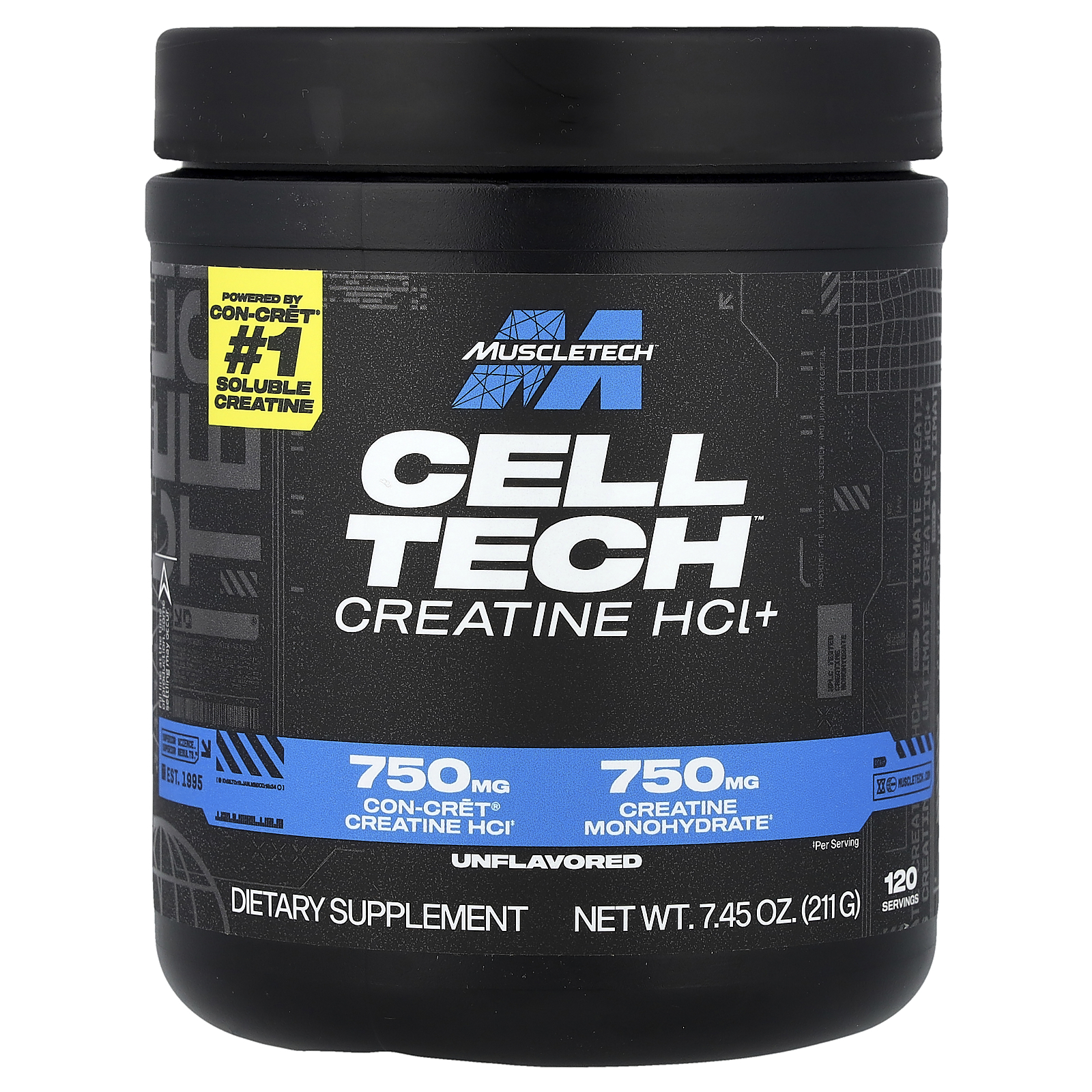

Photos from current listings. Actual item, color, and included accessories may vary.
Muscle Tech Creatine Buying Guide
MuscleTech creatine products are sports supplements centered on creatine monohydrate or creatine HCl, used to increase phosphocreatine stores and support short-duration power output. The primary buying trade-off is between proven monohydrate (low cost, 3–5 g clinical dose, possible bloating) and HCl (lower gram dose, claimed better solubility, higher cost, less independent evidence). The decision rule: choose monohydrate for verified efficacy and value, choose HCl only if you tolerate monohydrate poorly or specifically want a lower-gram dose.
Key takeaways
- Creatine monohydrate is the only form with decades of clinical evidence for strength and lean mass; 3–5 g daily saturates muscle stores in 3–4 weeks without a loading phase.
- Creatine HCl (as in MuscleTech Creactor) uses a hydrochloride salt at roughly 1–2 g per serving; it is more soluble in water but has far less independent efficacy data than monohydrate.
- Micronized monohydrate (e.g., Platinum 100% Creatine) has reduced particle size for better mixability; unmicronized monohydrate dissolves poorly and can leave grit in cold water.
At a glance
- Category
- Sports Performance
- Last updated
- Nov 29, 2026
Current offers
Highlights
- Creatine monohydrate is the only form with decades of clinical evidence for strength and lean mass; 3–5 g daily saturates muscle stores in 3–4 weeks without a loading phase.
- Creatine HCl (as in MuscleTech Creactor) uses a hydrochloride salt at roughly 1–2 g per serving; it is more soluble in water but has far less independent efficacy data than monohydrate.
- Micronized monohydrate (e.g., Platinum 100% Creatine) has reduced particle size for better mixability; unmicronized monohydrate dissolves poorly and can leave grit in cold water.
- MuscleTech tiers differ by format and additives: Platinum 100% Creatine is unflavored micronized monohydrate; Creactor is HCl plus added flavoring and sweeteners; Cell-Tech is monohydrate combined with carbs and amino acids.
Best use cases
- Best fit: strength or power athletes (sprint, lift, jump) choosing unflavored micronized monohydrate 3–5 g daily for the lowest cost per clinical dose.
- Best fit: users who experience bloating or GI discomfort on monohydrate at 5 g choosing creatine HCl at 1–2 g per serving, accepting higher cost and thinner evidence.
- Wrong fit: endurance-only athletes or casual gym-goers expecting creatine to replace training and protein intake; skip if you are not consistently resistance training.
- Wrong fit: buyers wanting a flavored all-in-one recovery drink choosing plain monohydrate; instead pick a carb-containing formula like Cell-Tech, but note added sugars.
Buying tips
- Dose monohydrate at 3–5 g daily (0.03 g per kg bodyweight); a 5 g scoop of unflavored powder is the standard clinical serving — HCl products require only 1–2 g per serving.
- Choose micronized monohydrate if you mix in cold water or a shaker; non-micronized powder needs warm water and vigorous shaking to dissolve.
- Check the label for creatine monohydrate as the sole ingredient (no added sugars or fillers) for a pure monohydrate product; flavored HCl products list sweeteners and acids.
- Skip loading phases if you want simplicity: 3–5 g daily reaches saturation in 3–4 weeks; a 20 g/day loading phase (4 × 5 g) saturates in 5–7 days but raises GI risk.
Specs
| Creatine Form | Monohydrate vs HCl vs blend |
|---|---|
| Clinical Dose | 3–5 g/day (mono); 1–2 g (HCl) |
| Mixability | Micronized vs standard powder |
| Additives | Unflavored pure vs flavored + carbs |
Related searches
What to check before buying
- Confirm your daily fluid intake is at least 2–3 L when supplementing creatine; creatine draws water into muscle cells and dehydration worsens side effects.
- Measure your bodyweight in kg (lbs ÷ 2.2) to set monohydrate dose at 0.03 g/kg; a 70 kg person needs about 2.1 g maintenance, rounded to 3–5 g.
- Verify the product is third-party tested (NSF Certified for Sport or Informed Sport) if you are a drug-tested athlete; unverified creatine may contain contaminants.
- Check the container label for servings per container and scoop size (5 g monohydrate vs 1–2 g HCl) so you know how long one tub lasts at your daily dose.
FAQ
Data sources: eBay / Amazon listings and product attribute feeds. Updated Nov 29, 2026.
Some links on this page are affiliate links. If you buy after clicking one, we may earn a commission at no extra cost to you. This does not change which products appear here or their order. Affiliate disclosure.