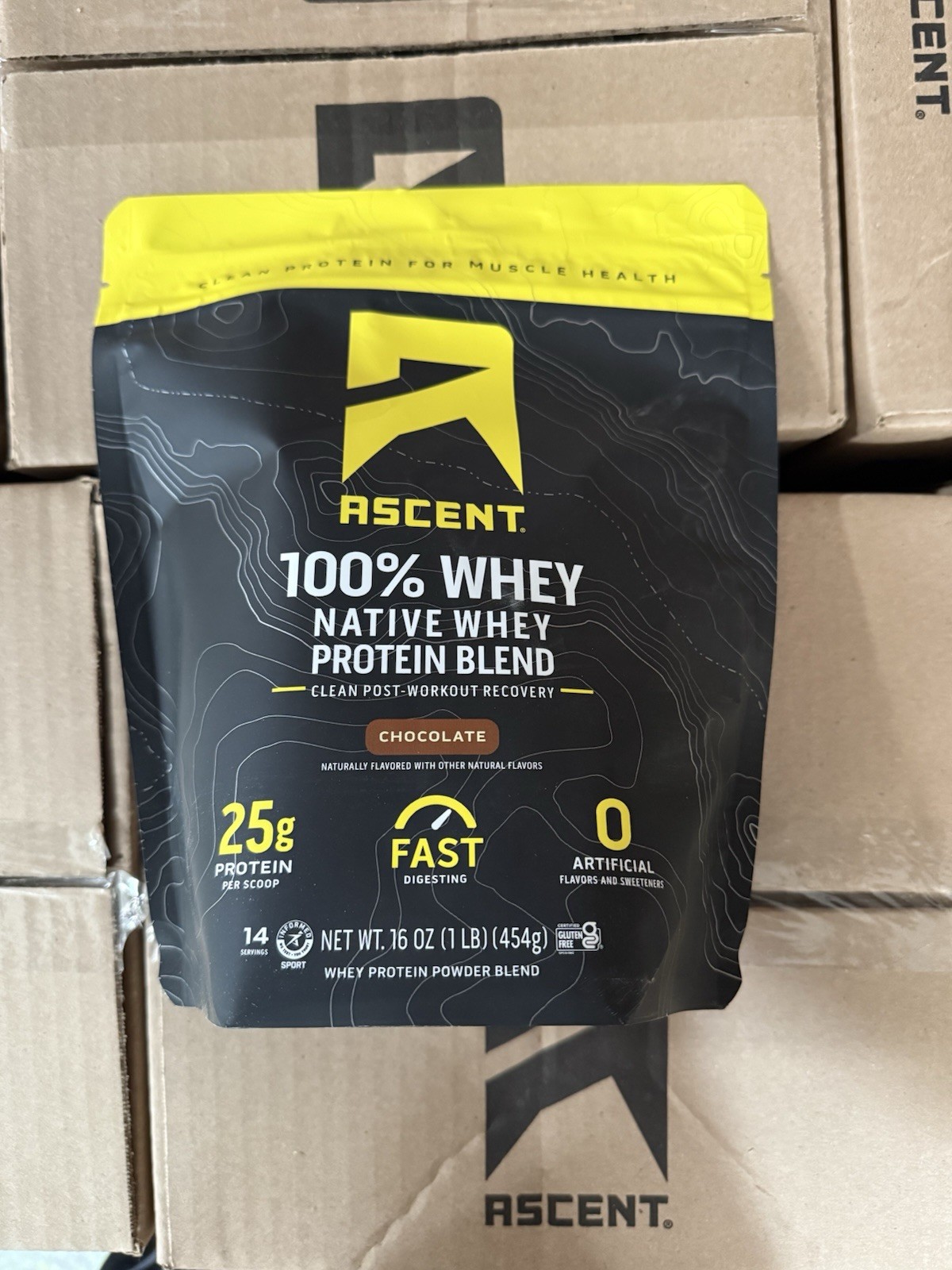

Photos from current listings. Actual item, color, and included accessories may vary.
Ascent Whey Protein Buying Guide
Ascent Whey Protein is a line of native whey isolate and blend powders positioned around clean labeling, third-party testing, and leucine-forward dosing for post-workout recovery. The core trade-off is native whey isolate (higher protein per scoop, lower lactose, faster digestion) versus a whey blend (isolate plus concentrate, slightly more carbs and fat, lower cost per gram of protein). Decide by your lactose tolerance and recovery goal: pick isolate for lean, fast-absorbing protein; pick blend only if you tolerate dairy well and want a budget-friendly daily shake.
Key takeaways
- Native whey isolate is filtered directly from milk rather than from cheese byproduct, yielding roughly 90% protein by weight and minimal lactose.
- Ascent isolate scoops typically deliver 25 g protein with 0-1 g sugar and about 100-110 calories; blend scoops deliver similar protein with more carbs and fat.
- The line is third-party tested and Informed Sport-certified on many SKUs, which matters for athletes subject to doping control.
At a glance
- Category
- Protein Nutrition
- Last updated
- Nov 27, 2026
Current offers
Highlights
- Native whey isolate is filtered directly from milk rather than from cheese byproduct, yielding roughly 90% protein by weight and minimal lactose.
- Ascent isolate scoops typically deliver 25 g protein with 0-1 g sugar and about 100-110 calories; blend scoops deliver similar protein with more carbs and fat.
- The line is third-party tested and Informed Sport-certified on many SKUs, which matters for athletes subject to doping control.
- Native whey retains higher levels of immunoglobulins and lactoferrin than ion-exchange isolate, supporting immune and gut benefits.
Best use cases
- Best fit: post-workout isolate shake within 30-60 minutes of training, mixed with water, when you want fast leucine delivery and minimal digestive load.
- Best fit: daily protein target support for lactose-sensitive users who get bloating from concentrate-heavy blends; choose isolate, not blend.
- Wrong fit: strict vegan or dairy-allergy shoppers; Ascent whey is milk-derived, so choose a plant or beef isolate instead.
- Wrong fit: budget-first buyers who only need a protein top-up; a whey concentrate or blend delivers similar grams at lower cost.
Buying tips
- Check the protein-per-scoop ratio: isolate should show 25 g protein in a ~30 g scoop; if the scoop is 35 g or more for 25 g protein, it is a blend.
- Look for Informed Sport or NSF Certified for Sport on the label if you compete in drug-tested sport; not every Ascent SKU carries it.
- Match flavor and size to your use rate: a 1 lb tub yields roughly 13-15 servings, so buy 2 lb or 4 lb if you shake daily.
- Prefer isolate if you are lactose-sensitive; blend contains whey concentrate with more lactose and may cause bloating.
Specs
| Protein Type | Native whey isolate vs blend |
|---|---|
| Protein per Scoop | 25 g (isolate) / 25 g (blend) |
| Certification | Informed Sport on select SKUs |
| Lactose Level | Very low (isolate) / low (blend) |
Related searches
What to check before buying
- Confirm your daily protein target (roughly 1.6-2.2 g per kg bodyweight for training) before choosing tub size and scoop count.
- Check the label for a complete amino acid profile and at least 2.5-3 g leucine per serving for muscle protein synthesis.
- Verify your shaker or blender can handle 8-12 oz liquid per scoop; isolate mixes thinner, blend may need more water.
- Store in a cool, dry place and reseal tightly; native whey is hygroscopic and clumps if exposed to humidity.
FAQ
Data sources: eBay / Amazon listings and product attribute feeds. Updated Nov 27, 2026.
Some links on this page are affiliate links. If you buy after clicking one, we may earn a commission at no extra cost to you. This does not change which products appear here or their order. Affiliate disclosure.