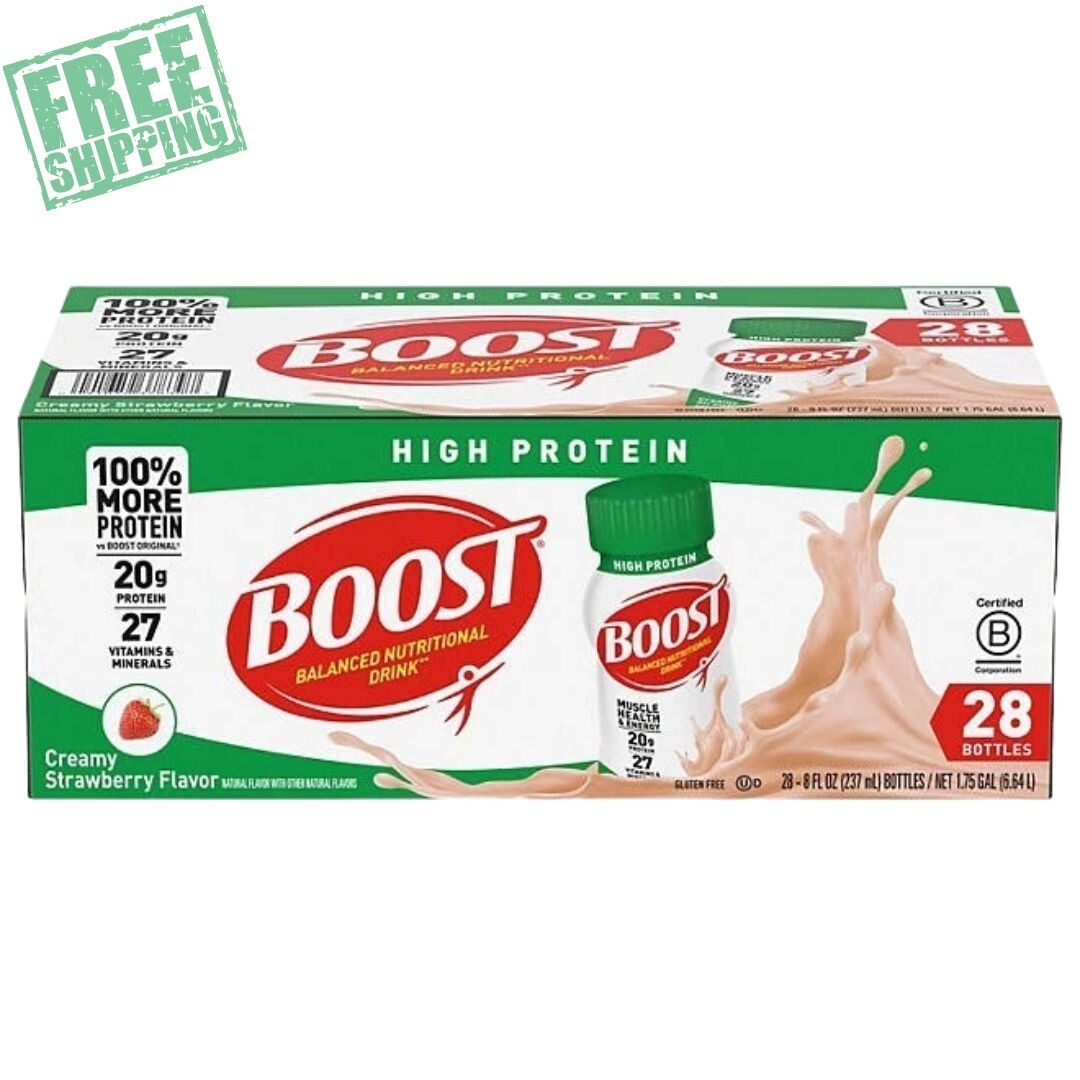

Photos from current listings. Actual item, color, and included accessories may vary.
Boost High Protein Nutritional Drink Buying Guide
Boost High Protein is a ready-to-drink nutritional beverage delivering 20 g of milk-based protein per 8 fl oz, positioned between ordinary meal-replacement shakes and clinical oral nutrition supplements. The core trade-off is protein density versus sugar/carb load and packaging format: original 20 g bottles vs. higher-protein or lower-sugar variants, and single-serve 8 oz vs. multi-pack cases. Buy the 20 g 8 oz format for general adult protein supplementation; step up to Plus or specialized lines only when a clinician specifies higher calories, protein, or specific nutrients.
Key takeaways
- Each 8 fl oz bottle delivers 20 g protein from milk protein concentrate and calcium caseinate, a slow-digesting casein-dominant blend suited to between-meal or bedtime use.
- Standard 8 fl oz bottles carry roughly 240-250 kcal with about 10-15 g total sugars; sugar-reduced and higher-protein sub-lines trade sweetness for protein density.
- Shelf-stable aseptic packaging gives unopened bottles multi-month ambient storage; once opened, refrigeration and use within 24 hours is required.
At a glance
- Category
- Protein Nutrition
- Status
- Listings available
- Last updated
- Nov 27, 2026
Current offers
Highlights
- Each 8 fl oz bottle delivers 20 g protein from milk protein concentrate and calcium caseinate, a slow-digesting casein-dominant blend suited to between-meal or bedtime use.
- Standard 8 fl oz bottles carry roughly 240-250 kcal with about 10-15 g total sugars; sugar-reduced and higher-protein sub-lines trade sweetness for protein density.
- Shelf-stable aseptic packaging gives unopened bottles multi-month ambient storage; once opened, refrigeration and use within 24 hours is required.
- Available formats include 8 fl oz singles, 4-packs, 6-packs, 12-packs, and 24-28 count cases in flavors such as Rich Chocolate, Vanilla, and Strawberry.
Best use cases
- Best fit: older adults or post-surgical recovery needing a convenient 20 g protein hit between meals — choose the 8 fl oz 24-count case in chocolate or vanilla for daily rotation.
- Best fit: bariatric or small-appetite users who cannot finish large 11-14 fl oz shakes — the 8 fl oz bottle is the correct portion; skip 20 g protein bars, which are denser and chewier.
- Wrong fit: athletes targeting 40 g+ per serving or low-carb ketogenic macros — Boost High Protein's carbohydrate and sugar content is too high; choose an isolate-based RTD instead.
- Wrong fit: dairy allergy or strict vegan diets — milk protein concentrate and caseinate are dairy-derived; select a plant-protein RTD rather than any Boost milk-based line.
Buying tips
- Match protein per bottle to your per-serving target: 20 g per 8 fl oz means two bottles equal 40 g; do not assume a 24-count case equals 24 servings if you plan doubles.
- Check the date code and format: aseptic bottles carry best-by dates typically 9-12 months out; 24-28 count cases suit daily drinkers, small packs suit trial.
- Prefer chocolate or vanilla for milk-protein blends — strawberry and fruit flavors tend to carry more added sugar to mask caseinate bitterness.
- Confirm the sub-line on the label: original High Protein (20 g), High Protein Plus (20 g with added vitamins/minerals), and sugar-reduced variants are distinct SKUs with different carb counts.
Specs
| Protein Per Bottle | 20 g per 8 fl oz |
|---|---|
| Protein Source | Milk protein concentrate + caseinate |
| Calories Per Bottle | 240-250 kcal (8 fl oz) |
| Pack Formats | 8 fl oz singles to 24-28 ct cases |
Alternatives to compare
Related searches
What to check before buying
- Verify your daily protein gap: if meals already supply 60-80 g, one 20 g bottle covers a typical older-adult target of 1.0-1.2 g/kg body weight.
- Check dairy tolerance: milk protein concentrate and calcium caseinate cause symptoms in lactose-intolerant users; lactose-free or plant RTDs are the substitute.
- Plan storage: unopened bottles need cool, dry, ambient storage; opened bottles require refrigeration and consumption within 24 hours.
- Confirm case count versus consumption rate: a 24-count case at one bottle daily lasts about three weeks; 28-count strawberry cases extend that to four weeks.
FAQ
Data sources: eBay / Amazon listings and product attribute feeds. Updated Nov 27, 2026.
Some links on this page are affiliate links. If you buy after clicking one, we may earn a commission at no extra cost to you. This does not change which products appear here or their order. Affiliate disclosure.