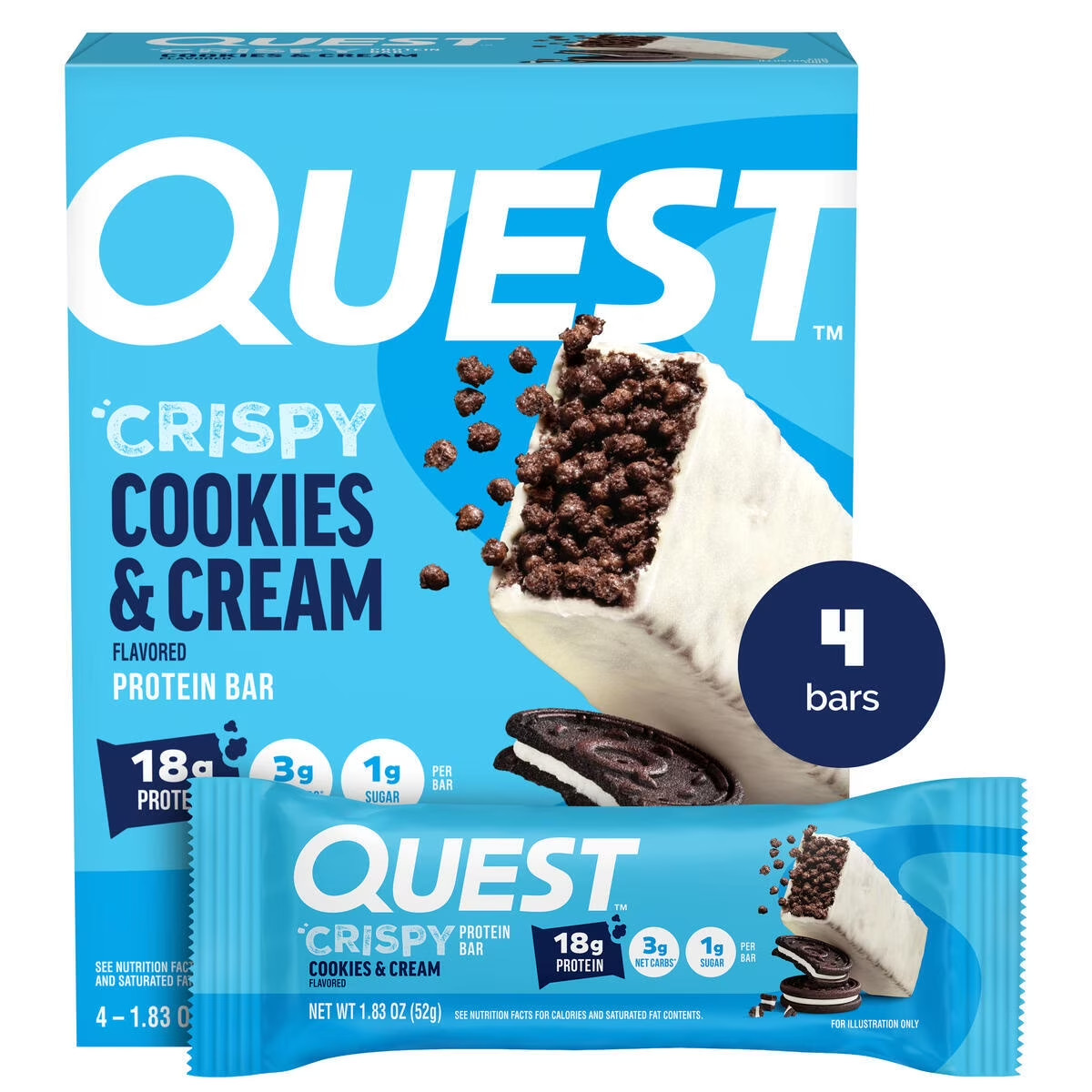

Photos from current listings. Actual item, color, and included accessories may vary.
Cookie And Cream Protein Bar Buying Guide
Cookie and cream protein bars are high-protein, low-sugar snack bars flavored to mimic the taste of crushed chocolate sandwich cookies in a creamy matrix. The core trade-off is between protein source and fiber type versus the realism and texture of the cookie-and-cream flavor, which often relies on sugar alcohols, inulin, or dairy powders that affect both taste and digestive tolerance. The decision rule: choose bars whose first protein source is a complete dairy protein (whey or milk isolate) and whose sugar alcohol load stays low if you eat them daily, and skip any bar whose protein blends are collagen- or gelatin-based if muscle recovery is the goal.
Key takeaways
- Quest-style bars use a milk protein isolate and whey isolate blend at roughly 20–21g protein and 1–4g sugar per bar, with soluble corn fiber and sugar alcohols supplying the cookie-and-cream body.
- Quest Hero bars replace some of that fiber base with a gelatin or collagen-style coating and a different protein matrix, yielding a softer, candy-bar texture but a lower-quality amino acid profile for recovery.
- Sugar alcohol type matters: maltitol-heavy recipes cause more GI distress than erythritol or allulose blends, so daily-eaters should favor bars listing erythritol or allulose first among sweeteners.
At a glance
- Category
- Protein Nutrition
- Last updated
- Nov 27, 2026
Current offers
Highlights
- Quest-style bars use a milk protein isolate and whey isolate blend at roughly 20–21g protein and 1–4g sugar per bar, with soluble corn fiber and sugar alcohols supplying the cookie-and-cream body.
- Quest Hero bars replace some of that fiber base with a gelatin or collagen-style coating and a different protein matrix, yielding a softer, candy-bar texture but a lower-quality amino acid profile for recovery.
- Sugar alcohol type matters: maltitol-heavy recipes cause more GI distress than erythritol or allulose blends, so daily-eaters should favor bars listing erythritol or allulose first among sweeteners.
- Bar weight and protein density divide the category: standard 60g bars deliver about 20g protein, while larger 80–90g bars push 25–30g but often add more fat and calories per bar.
Best use cases
- Best fit: post-workout or meal-replacement snack where you want 20g+ complete dairy protein with under 5g sugar — pick a whey/milk isolate bar in the 60g size and skip collagen-based versions.
- Best fit: daily desk or travel snack where flavor realism matters more than strict macros — choose a Hero-style or coated bar, but cap intake to one per day if it contains maltitol.
- Wrong fit: strict keto or low-FODMAP diets — most cookie-and-cream bars use inulin or soluble corn fiber that can trigger bloating, so look for bars with tapioca fiber or allulose instead.
- Wrong fit: pre-workout fast fuel — these bars are low-glycemic by design; a banana or glucose gel beats a fiber-heavy protein bar for immediate energy.
Buying tips
- Check the protein source order: whey isolate or milk protein isolate first means a complete amino acid profile; collagen peptides or gelatin first means incomplete protein unsuitable as a primary recovery source.
- Compare sugar alcohol grams per bar: keep total sugar alcohols under 10g per serving if you eat bars daily, and prefer erythritol or allulose over maltitol to reduce digestive upset.
- Match bar size to purpose: 60g bars at 20g protein suit snacks and portion control, while 80g+ bars at 25–30g protein fit meal replacement but carry 250–350 calories.
- Confirm the fiber source if you have IBS: soluble corn fiber and inulin are common FODMAP triggers, while tapioca fiber and allulose are gentler options in the same flavor category.
Specs
| Protein Source | Whey/milk isolate vs collagen blend |
|---|---|
| Protein Per Bar | 20–21g (standard) / 25–30g (large) |
| Sugar Per Bar | 1–4g total sugar |
| Sweetener Base | Erythritol/allulose vs maltitol |
Related searches
What to check before buying
- Dietary fit: verify the bar is gluten-free if needed and check whether the cookie pieces contain wheat flour, which many cookie-and-cream bars do.
- Allergen check: most cookie-and-cream bars contain milk and soy; confirm whether the facility handles peanuts or tree nuts if you have severe allergies.
- Storage: coated or candy-style bars soften above roughly 75°F/24°C, so plan for a cool drawer or insulated bag if you carry them in a car or gym bag.
- Quantity format: 12-packs suit daily routine and cost-per-bar savings, while 4-packs let you test flavor and texture tolerance before committing to a full box.
FAQ
Data sources: eBay / Amazon listings and product attribute feeds. Updated Nov 27, 2026.
Some links on this page are affiliate links. If you buy after clicking one, we may earn a commission at no extra cost to you. This does not change which products appear here or their order. Affiliate disclosure.