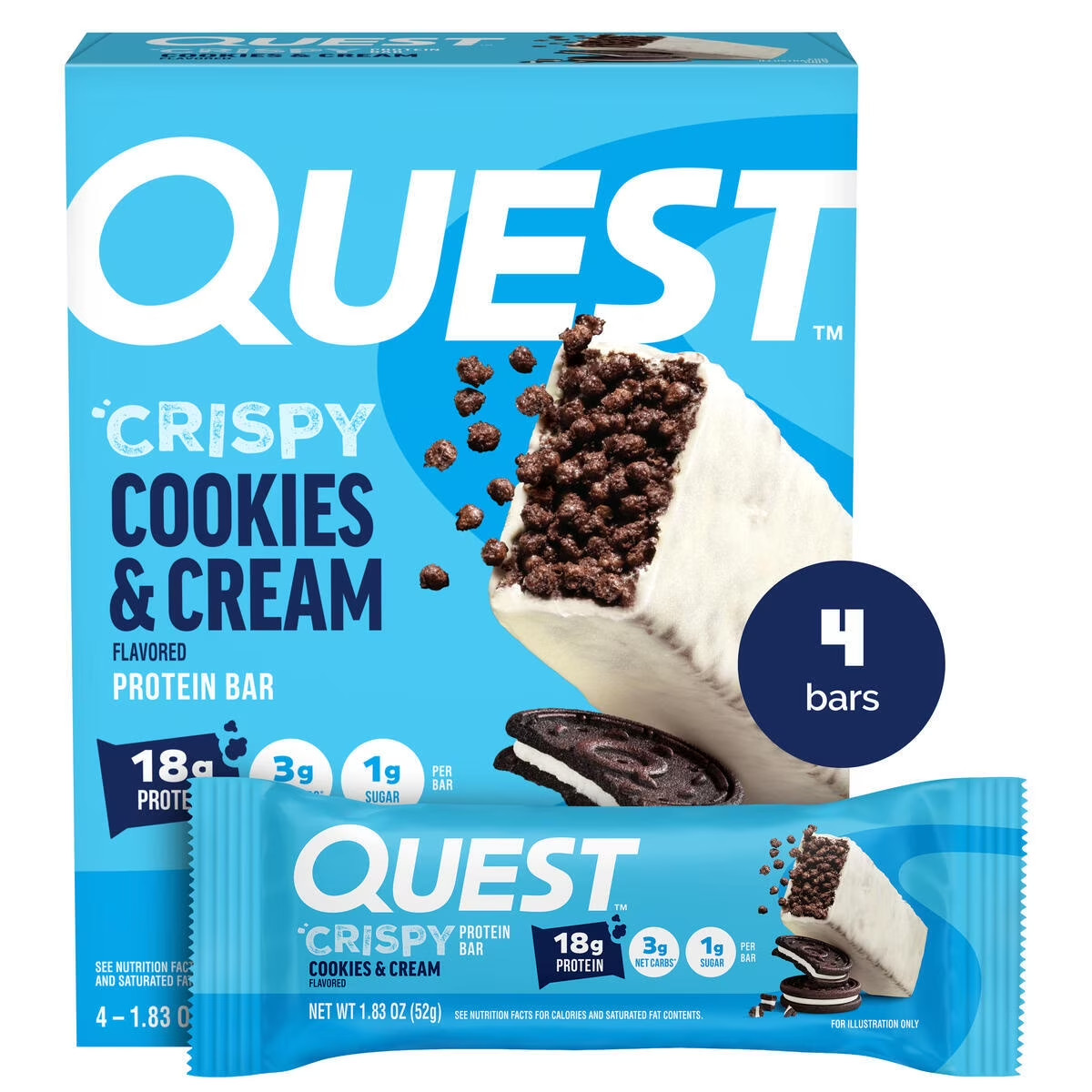

Photos from current listings. Actual item, color, and included accessories may vary.
Quest Mini Bar Buying Guide
Quest Mini Bars are smaller-format protein bars from Quest Nutrition, typically around half the size of a standard Quest Bar, designed as low-calorie, high-protein snacks with 1–2g sugar. The primary trade-off is between the standard 60g bar (20–21g protein, more calories and fiber) and the mini format (roughly 80–100 calories, 8–10g protein, less volume and satiety), so buyers must match bar size to snack purpose. The decision rule: choose standard 60g bars for meal replacement or post-workout protein, and mini bars for portion-controlled snacking or calorie budgeting.
Key takeaways
- Standard Quest Bars are 60g with 20–21g protein, 1–2g sugar, and 14–17g fiber; Mini Bars are roughly half the size, delivering about 8–10g protein and 80–100 calories per bar.
- Quest uses a protein blend of milk protein isolate and whey protein isolate, giving a complete amino acid profile; gluten-free and kosher certification vary by flavor and line.
- Hero Bars use a different base (whey protein isolate with a caramel layer) and are not identical to standard Quest Bars in texture or macros, so treat Hero as a separate product tier.
At a glance
- Category
- Protein Nutrition
- Last updated
- Nov 27, 2026
Current offers
Highlights
- Standard Quest Bars are 60g with 20–21g protein, 1–2g sugar, and 14–17g fiber; Mini Bars are roughly half the size, delivering about 8–10g protein and 80–100 calories per bar.
- Quest uses a protein blend of milk protein isolate and whey protein isolate, giving a complete amino acid profile; gluten-free and kosher certification vary by flavor and line.
- Hero Bars use a different base (whey protein isolate with a caramel layer) and are not identical to standard Quest Bars in texture or macros, so treat Hero as a separate product tier.
- Flavor lines differ in sugar alcohol type and net carbs: some use erythritol and soluble corn fiber, so individuals sensitive to sugar alcohols should compare the ingredient panel across flavors.
Best use cases
- Best fit: buy Mini Bars when you want a 100-calorie-or-less protein snack between meals, for kids’ lunchboxes, or for portion control; skip full-size bars if you consistently eat only half.
- Best fit: choose standard 60g Quest Bars for post-workout recovery or a meal replacement because they deliver 20–21g protein and 14–17g fiber; skip minis if your goal is meaningful protein per serving.
- Best fit: pick Hero Bars only if you want a caramel-cookie texture and accept a different macro profile; skip Hero if you need the exact standard Quest Bar macros for a controlled diet.
Buying tips
- Match bar weight to protein target: standard 60g bars give 20–21g protein; mini bars at roughly half the weight give 8–10g, so two minis approximate one full bar but with more packaging and often more calories from coating.
- Check the count and packaging format: 12-count boxes are standard retail packs; 4-count packs and variety packs are convenient for trying flavors but cost more per bar, so buy 12-count for staples.
- Verify flavor-specific macros on the back panel, not the front: Birthday Cake and Strawberry Shortcake lines differ in protein (20g vs 21g) and sugar (1–2g), so select based on the exact flavor’s nutrition facts.
- For heat-sensitive shipping, avoid coated flavors (cookies & cream, birthday cake) in warm months because chocolate and caramel layers soften; choose uncoated flavors like oatmeal chocolate chip or blueberry muffin for summer delivery.
Specs
| Format | Standard 60g bar vs Mini ~30g bar |
|---|---|
| Protein per Bar | 20–21g standard / 8–10g mini |
| Sugar per Bar | 1–2g (flavor dependent) |
| Net Carbs | 4–6g standard / 2–3g mini |
Related searches
What to check before buying
- Confirm whether you are buying Mini Bars or standard 60g bars: listings often say “mini” only in the title, and the net weight (e.g., 1.06 oz vs 2.12 oz per bar) is the definitive check.
- Count the bars per box: 12-count is the standard retail box; 4-count and variety packs are smaller, so calculate cost per bar against your consumption rate before committing.
- Check allergen statements: Quest Bars contain milk and soy and are processed in facilities that may handle peanuts and tree nuts; mini bars share the same allergen profile.
- For gifting or resale, verify expiration dates on the box bottom; protein bars have a 9–12 month shelf life from production, and closeout listings may ship shorter-dated stock.
FAQ
Data sources: eBay / Amazon listings and product attribute feeds. Updated Nov 27, 2026.
Some links on this page are affiliate links. If you buy after clicking one, we may earn a commission at no extra cost to you. This does not change which products appear here or their order. Affiliate disclosure.