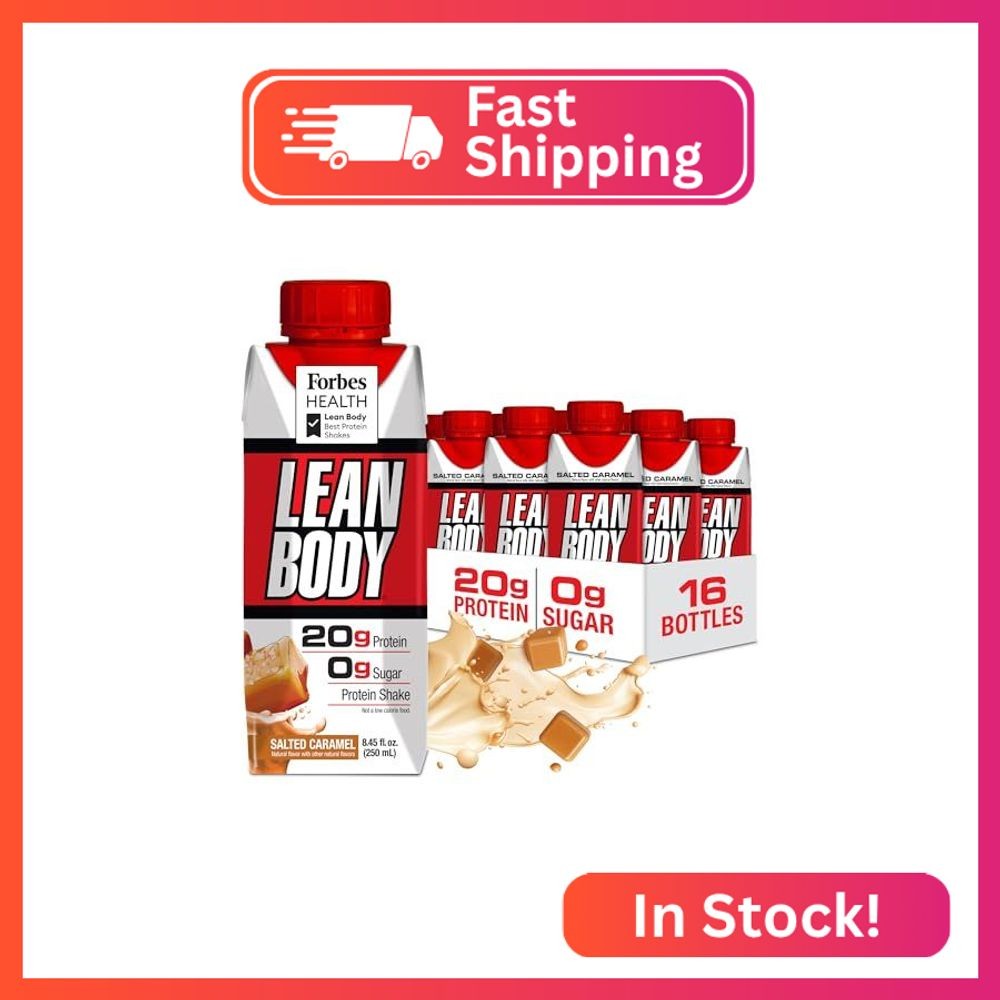

Photos from current listings. Actual item, color, and included accessories may vary.
Whey Protein Shake Buying Guide
Whey protein shakes span ready-to-drink (RTD) bottles and powders, with the core trade-off being protein dose and absorption speed versus added sugars, calories, and convenience. Durable, effective options deliver 20–30g of complete whey protein per serving with low sugar and third-party testing; compromises hide behind maltodextrin fillers, underdosed protein, or unverified blends. Choose RTD for portion control and portability; choose powder for cost-per-gram and customizable macros.
Key takeaways
- Whey isolate is 90%+ protein by dry weight and near-lactose-free; concentrate is 70–80% protein with more carbs and fat.
- RTD shakes are typically 11–14 fl oz and deliver 20–30g protein; 8.45 fl oz formats usually cap out near 20g.
- Hydrolysates are pre-digested for fastest absorption; isolates and concentrates are slower and cheaper per gram.
At a glance
- Category
- Protein Nutrition
- Last updated
- Nov 27, 2026
Current offers
Highlights
- Whey isolate is 90%+ protein by dry weight and near-lactose-free; concentrate is 70–80% protein with more carbs and fat.
- RTD shakes are typically 11–14 fl oz and deliver 20–30g protein; 8.45 fl oz formats usually cap out near 20g.
- Hydrolysates are pre-digested for fastest absorption; isolates and concentrates are slower and cheaper per gram.
- Third-party seals (NSF Certified for Sport, Informed Sport) verify label accuracy and banned-substance screening.
Best use cases
- Post-workout recovery: pick a whey isolate powder with 25g protein and <2g sugar per scoop for fast absorption and low GI load.
- Meal replacement or weight-loss snack: choose an RTD with 20–30g protein, <5g sugar, and 150–250 calories per bottle for satiety without sugar spikes.
- Lactose-sensitive users: select whey isolate or hydrolysate; skip whey concentrate blends that list milk or lactose among top ingredients.
- Budget bulk protein: buy a 5lb concentrate tub only if the label shows 24g+ protein per scoop and no maltodextrin as the first listed carbohydrate.
Buying tips
- Compute cost per gram of protein: divide tub price by (servings × protein per serving); isolate should land within 20% of concentrate's cost per gram to justify the upgrade.
- Match protein dose to body weight: aim for 0.7–1g protein per pound of bodyweight daily; a 25g shake covers roughly one-third for a 160lb adult.
- Check the ingredient order: whey protein isolate or concentrate should be first; if maltodextrin, sugar, or oil appears before protein, the dose is diluted.
- For RTD shakes, verify protein-to-calorie ratio: 20g+ protein per 200 calories or better signals a lean formula rather than a dessert drink.
Specs
| Protein Form | Isolate / Concentrate / Hydrolysate |
|---|---|
| Protein Per Serving | 20–30 g |
| Sugar Per Serving | <5 g (RTD) / <2 g (powder) |
| Format | RTD bottle / Powder tub |
Related searches
What to check before buying
- Confirm your daily protein target and how many shakes you will drink; this sets whether you need 20g RTD bottles or 25g powder scoops.
- Measure your shaker or blender capacity: powder scoops need 8–16 oz of liquid and a blender ball or mesh for full dispersion.
- Check lactose tolerance: isolate and hydrolysate are safer; concentrate may cause bloating if you are sensitive.
- For RTD multi-packs, verify storage: most are shelf-stable until opening, but check whether the format requires refrigeration after opening.
FAQ
Data sources: eBay / Amazon listings and product attribute feeds. Updated Nov 27, 2026.
Some links on this page are affiliate links. If you buy after clicking one, we may earn a commission at no extra cost to you. This does not change which products appear here or their order. Affiliate disclosure.