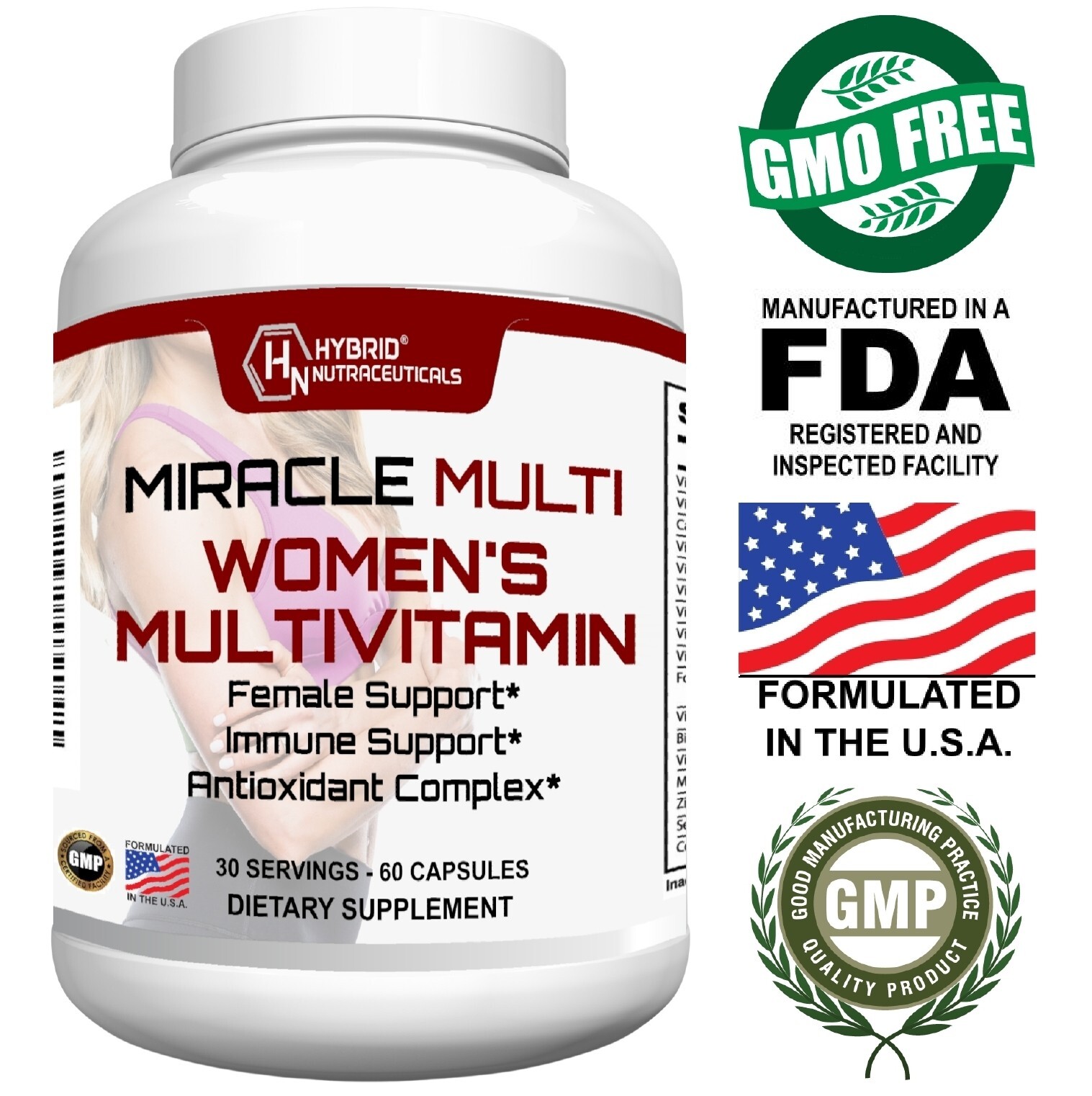

Photos from current listings. Actual item, color, and included accessories may vary.
Vitamin Supplement Women Buying Guide
Women's vitamin supplements are daily multivitamin formulas adjusted for female physiology—iron for menstrual losses, calcium and vitamin D for bone density, and folate for reproductive health—delivered as capsules, tablets, gummies, or multi-packet programs. The core trade-off is whole-food vs. isolated synthetic nutrients and capsule count vs. convenience-packet formats: whole-food matrices improve tolerance but demand 3-4 capsules daily, while once-daily isolates and gummy formats trade nutrient density for adherence. The decision rule: pick a whole-food or chelated-mineral formula with third-party testing if you want maximum absorption and GI tolerance; pick a once-daily or packet program only if convenience and adherence outweigh per-dose nutrient load.
Median $34.45
Key takeaways
- Whole-food formulas (fermented or food-grown nutrients) typically deliver 3-4 capsules per serving, while once-daily isolates compress the same vitamins into a single tablet with lower mineral chelation.
- Iron content separates life-stage tiers: reproductive-age formulas usually carry 18 mg iron, while 50+ and postmenopausal formulas drop to 0-8 mg to avoid excess accumulation.
- Chelated minerals (bisglycinate, citrate) absorb better and cause less GI upset than oxide or carbonate forms, which are common in low-cost compressed tablets.
At a glance
- Category
- Vitamins & Minerals
- Last updated
- Nov 28, 2026
Current offers
Highlights
- Whole-food formulas (fermented or food-grown nutrients) typically deliver 3-4 capsules per serving, while once-daily isolates compress the same vitamins into a single tablet with lower mineral chelation.
- Iron content separates life-stage tiers: reproductive-age formulas usually carry 18 mg iron, while 50+ and postmenopausal formulas drop to 0-8 mg to avoid excess accumulation.
- Chelated minerals (bisglycinate, citrate) absorb better and cause less GI upset than oxide or carbonate forms, which are common in low-cost compressed tablets.
- Gummy multivitamins lack iron and calcium by formulation necessity and rely on sugar syrups; capsule and tablet formats carry the full mineral panel.
Best use cases
- Reproductive-age women with regular menstrual cycles: choose a formula with 18 mg iron plus 400-800 mcg folate; skip 50+ formulas that zero out iron.
- Women 50 and older or postmenopausal: pick a 50+ tier with reduced iron, elevated vitamin D (800-1000 IU), and calcium; skip high-iron reproductive formulas.
- Busy professionals who skip doses: a daily packet program (e.g., GNC Women's 30+ Vitapak style) enforces adherence; skip it if you want a single clean capsule with no extra packets.
- Women with sensitive stomachs: choose fermented whole-food capsules or chelated minerals; skip compressed oxide-mineral tablets taken on an empty stomach.
Buying tips
- Match iron to life stage: 18 mg for menstruating women, 0-8 mg for 50+; excess iron in postmenopausal women is a real risk, not a bonus.
- Check folate form: methylfolate (5-MTHF) is the active form for MTHFR variants; folic acid is cheaper but requires conversion.
- Count capsules per serving: a 4-capsule whole-food formula at 240 capsules lasts 60 days—calculate cost-per-day before committing to the bottle size.
- Prefer chelated minerals (bisglycinate, citrate, malate) over oxides; oxide forms are poorly absorbed and a common cause of nausea.
Specs
| Life-Stage Tier | 18-49 / 50+ / Prenatal |
|---|---|
| Iron Per Serving | 18 mg vs 0-8 mg (50+) |
| Folate Form | Methylfolate vs Folic Acid |
| Mineral Chelation | Bisglycinate/Citrate vs Oxide |
Related searches
What to check before buying
- Confirm your iron need by life stage: menstrual status, pregnancy plans, and menopause determine whether 18 mg or 0-8 mg is correct.
- Check for interacting medications: calcium and iron bind thyroid meds and certain antibiotics; separate doses by 4 hours.
- Verify the format fits your routine: gummies lack iron and calcium, so they cannot replace a full mineral panel.
- Inspect the supplement facts panel for third-party testing seals (NSF, USP) and avoid proprietary blends that hide doses.
FAQ
Data sources: eBay / Amazon listings and product attribute feeds. Updated Nov 28, 2026.
Some links on this page are affiliate links. If you buy after clicking one, we may earn a commission at no extra cost to you. This does not change which products appear here or their order. Affiliate disclosure.