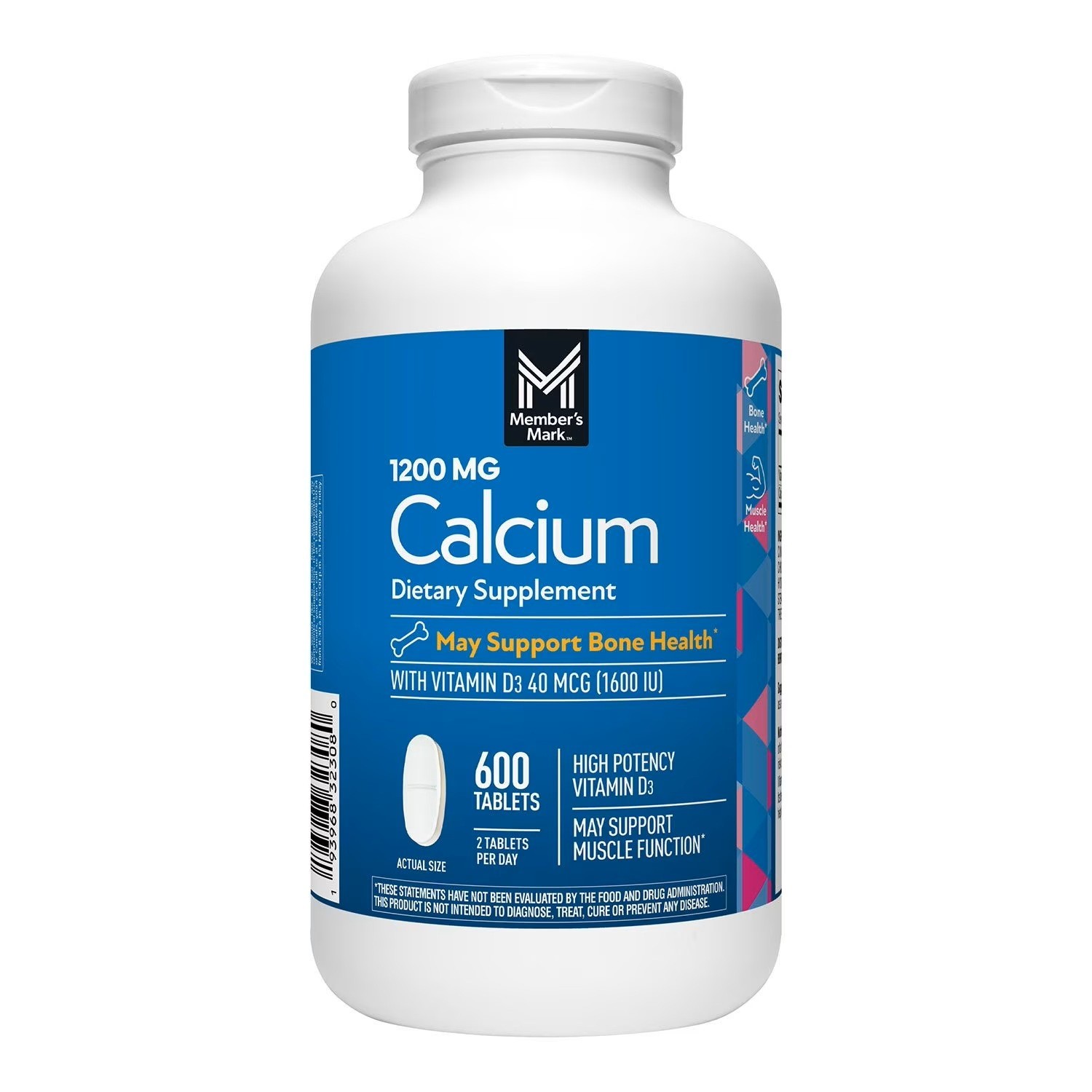

Photos from current listings. Actual item, color, and included accessories may vary.
Calcium Tablet Bone Buying Guide
Calcium tablets for bone health are mineral supplements whose efficacy depends on the calcium salt form, elemental calcium yield per tablet, and co-factors like vitamin D3 and magnesium. The core trade-off is absorption efficiency and GI tolerance versus pill burden: carbonate delivers high elemental calcium per tablet but requires stomach acid, while citrate absorbs without acid and suits low-acid users at the cost of larger or more tablets. The decision rule is simple: match the salt form to your digestive profile and dose to your age-based daily requirement minus dietary intake, and skip any product that lists compound weight rather than elemental calcium.
Key takeaways
- Calcium carbonate is 40% elemental calcium; calcium citrate is 21%, so a 1250mg carbonate tablet yields 500mg elemental while citrate needs roughly double the compound weight for the same dose.
- Vitamin D3 (cholecalciferol) is the preferred co-factor for intestinal calcium absorption; look for 600-800 IU per tablet to match bone-health dosing without exceeding the 4000 IU upper limit when stacked.
- Magnesium and zinc are synergistic co-factors in bone matrix formation; a combined calcium-magnesium-zinc formula improves compliance but requires checking that each mineral stays below its tolerable upper intake level.
At a glance
- Category
- Vitamins & Minerals
- Last updated
- Nov 28, 2026
Current offers
Highlights
- Calcium carbonate is 40% elemental calcium; calcium citrate is 21%, so a 1250mg carbonate tablet yields 500mg elemental while citrate needs roughly double the compound weight for the same dose.
- Vitamin D3 (cholecalciferol) is the preferred co-factor for intestinal calcium absorption; look for 600-800 IU per tablet to match bone-health dosing without exceeding the 4000 IU upper limit when stacked.
- Magnesium and zinc are synergistic co-factors in bone matrix formation; a combined calcium-magnesium-zinc formula improves compliance but requires checking that each mineral stays below its tolerable upper intake level.
- Absorption mechanics differ by salt: carbonate needs gastric acid and should be taken with food, while citrate and malate absorb reliably on an empty stomach and are the choice for proton-pump inhibitor users or older adults with reduced acid output.
Best use cases
- Best fit: adults with normal stomach acid who want a high-dose, low-pill-count regimen should choose calcium carbonate 600mg elemental with D3, taken with meals.
- Best fit: older adults, PPI or antacid users, and those with bariatric surgery should pick calcium citrate 315-350mg elemental per tablet to guarantee absorption without acid.
- Best fit: shoppers seeking a single bone-support complex should choose a calcium-magnesium-zinc plus D3 formula, provided the magnesium and zinc doses stay within safe combined limits.
- Wrong fit: anyone expecting a single tablet to cover the full 1200mg daily requirement should skip high-count monotherapy and instead combine dietary calcium with split doses of 500-600mg elemental per sitting.
Buying tips
- Read the Supplement Facts for 'calcium (from ...)' elemental mg, not compound mg: a 1250mg carbonate tablet is 500mg elemental, and a 950mg citrate tablet is only 200mg elemental.
- Split doses above 500mg elemental calcium into two sittings; absorption efficiency drops sharply when a single dose exceeds roughly 500-600mg.
- Match D3 to 600-800 IU per tablet so total daily intake stays under the 4000 IU tolerable upper limit, and confirm the label states cholecalciferol (D3), not ergocalciferol (D2).
- For combined formulas, check that magnesium stays under 350mg supplemental and zinc under 40mg per day, since calcium-magnesium-zinc products vary widely in elemental yield.
Specs
| Calcium Salt Form | Carbonate (40%) vs Citrate (21%) |
|---|---|
| Elemental Calcium/Dose | 500-600mg per sitting |
| Vitamin D3 Co-Factor | 600-800 IU cholecalciferol |
| Absorption Requirement | With food (carbonate) / Any (citrate) |
Related searches
What to check before buying
- Calculate your dietary calcium first: dairy, fortified plant milks, and leafy greens typically contribute 300-600mg daily, so supplement only the gap to your age-based target (1000mg for adults 19-50, 1200mg for women 51+ and men 71+).
- Confirm your medication profile: proton-pump inhibitors, H2 blockers, and antacids reduce gastric acid, making citrate or malate the compatible salt form.
- Check tablet dimensions and count against your tolerance: high-dose carbonate tablets are often large, and citrate regimens may require 2-3 tablets per dose.
- Verify the label lists elemental calcium, vitamin D3 as cholecalciferol, and third-party testing or USP/NSF verification for heavy-metal and potency assurance.
FAQ
Data sources: eBay / Amazon listings and product attribute feeds. Updated Nov 28, 2026.
Some links on this page are affiliate links. If you buy after clicking one, we may earn a commission at no extra cost to you. This does not change which products appear here or their order. Affiliate disclosure.