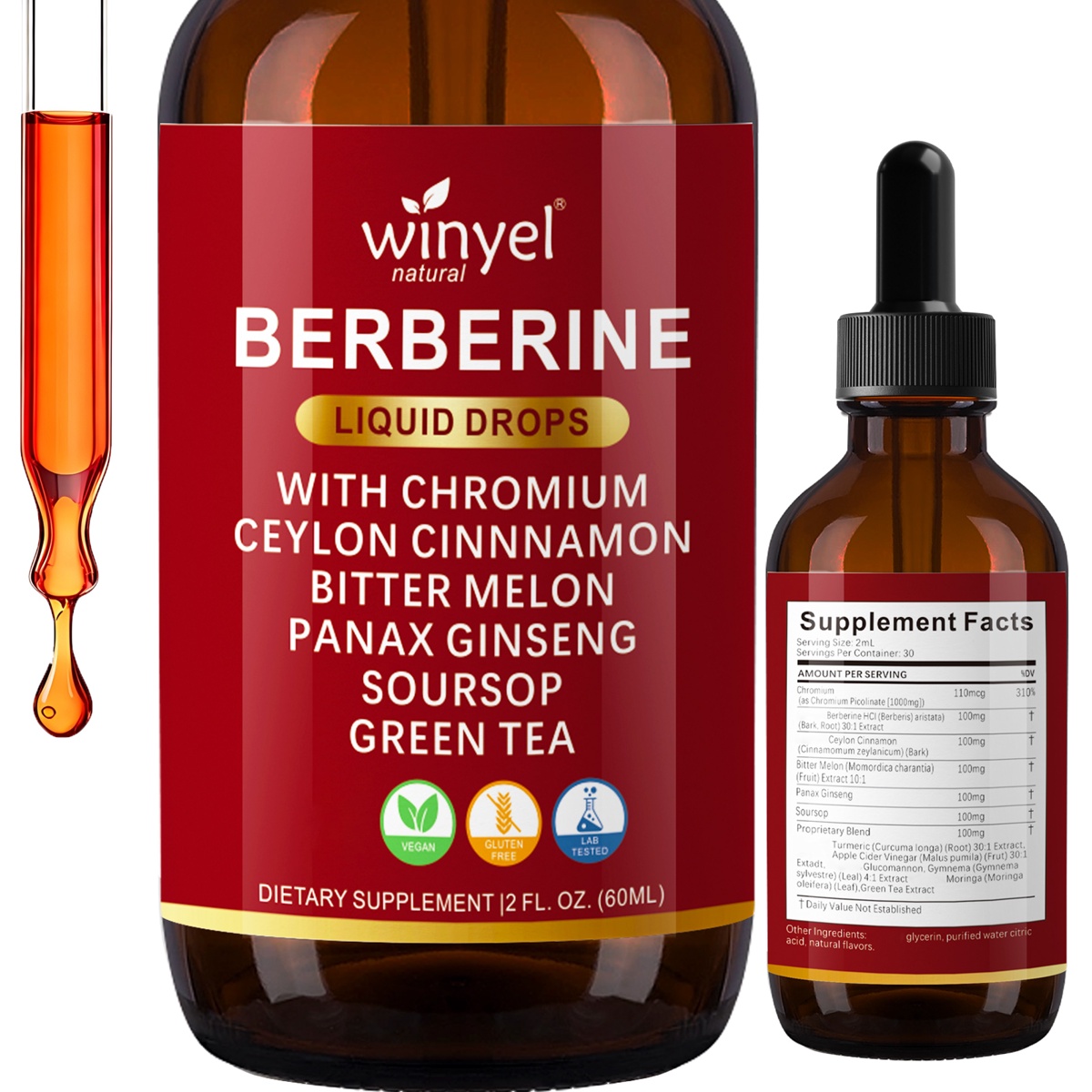

Photos from current listings. Actual item, color, and included accessories may vary.
Organic Berberine Supplement Buying Guide
Organic berberine supplements are herbal glucose-metabolism aids, and the decisive trade-off is between verified organic berberine source and delivery format—capsules with standardized HCl, liquid drops, or combination blends—since format dictates dose accuracy and purity risk. Choose a single-ingredient organic berberine with a stated HPLC purity and per-serving mg, and avoid multi-herb blends where berberine is a minor ingredient.
Key takeaways
- Berberine HCl standardized to 97% purity is the clinical form; organic whole-root powders vary widely in berberine content and require a stated standardization percentage.
- Liquid drops deliver fast absorption but dose by volume, so a 1:3 or 1:5 extract ratio must be printed on the label to calculate actual berberine mg per dropper.
- Combination formulas listing bitter melon, gymnema, and chromium usually contain sub-clinical berberine doses; single-ingredient capsules at 500 mg per serving are the reliable tier.
At a glance
- Category
- Vitamins & Minerals
- Last updated
- Nov 28, 2026
Current offers
Highlights
- Berberine HCl standardized to 97% purity is the clinical form; organic whole-root powders vary widely in berberine content and require a stated standardization percentage.
- Liquid drops deliver fast absorption but dose by volume, so a 1:3 or 1:5 extract ratio must be printed on the label to calculate actual berberine mg per dropper.
- Combination formulas listing bitter melon, gymnema, and chromium usually contain sub-clinical berberine doses; single-ingredient capsules at 500 mg per serving are the reliable tier.
- Organic certification (USDA or EU Organic) covers cultivation and processing, not berberine potency, so pair the organic seal with a third-party assay for active compound.
Best use cases
- Best fit: daily metabolic support—choose 500 mg berberine HCl capsules at 97% purity, taken with meals, from a brand publishing a per-batch certificate of analysis.
- Best fit: users who dislike pills—select an organic berberine liquid extract with a printed extract ratio and dropper-marked mg per serving, not a flavored blend.
- Wrong fit: shoppers seeking a single berberine dose from a multi-herb drop that lists berberine after bitter melon and gymnema; pick a dedicated berberine product instead.
- Wrong fit: anyone expecting cinnamon's own effects from a berberine-cinnamon combo; buy Ceylon cinnamon separately and keep berberine as its own standardized capsule.
Buying tips
- Match the label to clinical dosing: 500 mg berberine HCl taken 2-3 times daily is the studied range, so choose capsules, not drops, when hitting that total reliably matters.
- For liquid extracts, multiply the dropper volume by the stated mg/mL; a 1:3 extract at 1 mL per serving rarely equals 500 mg berberine without a concentrate claim.
- Prefer products that name berberine hydrochloride or berberine extract with a standardization percentage over 'organic berberine root powder' with no assay.
- Verify the organic seal is USDA or EU Organic and the berberine source is named—Berberis aristata or Berberis vulgaris—since 'berberine' alone can mask low-potency root fillers.
Specs
| Active Form | Berberine HCl 97% vs whole-root powder |
|---|---|
| Delivery Format | Capsule 500 mg vs liquid dropper extract |
| Organic Standard | USDA Organic vs EU Organic vs none |
| Dose Basis | mg per capsule vs mg per dropper |
Related searches
What to check before buying
- Confirm the serving size and servings per container yield at least 500 mg berberine per dose if you are replacing a standardized capsule regimen.
- Check capsule or dropper format against your routine: capsules for travel and precise mg, glass dropper bottles for home use with refrigeration after opening.
- Verify the label lists a batch certificate of analysis or third-party purity test for berberine content, heavy metals, and microbials.
- For liquid drops, confirm the extract ratio (e.g., 1:3, 1:5) and the mg-per-dropper figure so you can calculate your actual daily berberine intake.
FAQ
Data sources: eBay / Amazon listings and product attribute feeds. Updated Nov 28, 2026.
Some links on this page are affiliate links. If you buy after clicking one, we may earn a commission at no extra cost to you. This does not change which products appear here or their order. Affiliate disclosure.