
Photos from current listings. Actual item, color, and included accessories may vary.
Gut Probiotic Buying Guide
Gut probiotics are live microbial supplements taken to support digestive balance, regularity, and overall gut health. The core trade-off is CFU count and strain diversity versus capsule quality and shelf stability: high-CFU products can be ineffective if strains are poorly protected, while well-formulated mid-range options often outperform flashy megadose labels. The decision rule: prioritize verified strain identity (genus/species/strain code), delayed-release or spore-based delivery, and third-party testing over raw CFU numbers alone.
Median $26.97
Key takeaways
- CFU counts range from 10 billion to 60 billion per capsule; clinical evidence supports 1–50 billion CFU daily for general gut support, with higher counts not inherently superior.
- Delayed-release or enteric-coated capsules survive stomach acid; spore-forming strains (Bacillus) are naturally acid-resistant and shelf-stable without refrigeration.
- Strain specificity matters: Lactobacillus rhamnosus GG and Saccharomyces boulardii have strain-level clinical evidence; generic 'probiotic blend' labels without strain codes are unverifiable.
At a glance
- Category
- Probiotics & Digestion
- Last updated
- Nov 27, 2026
Current offers
 Probiotics 60 Billion CFU + 10 Strains - Daily Probiotic Lactobacillus Blend Gut$20.82Last checked Nov 19, 2026View on eBay
 4th-Generation Luminous Gut Probiotics 10 Billion CFU Effectively Improves Gastrointestinal Function$26.99View on Mallflare
 All Right Nutrition GUT FREEDOM Probiotic For Gut Health Dietary Supplement 60$21.95Last checked Nov 24, 2026View on eBay
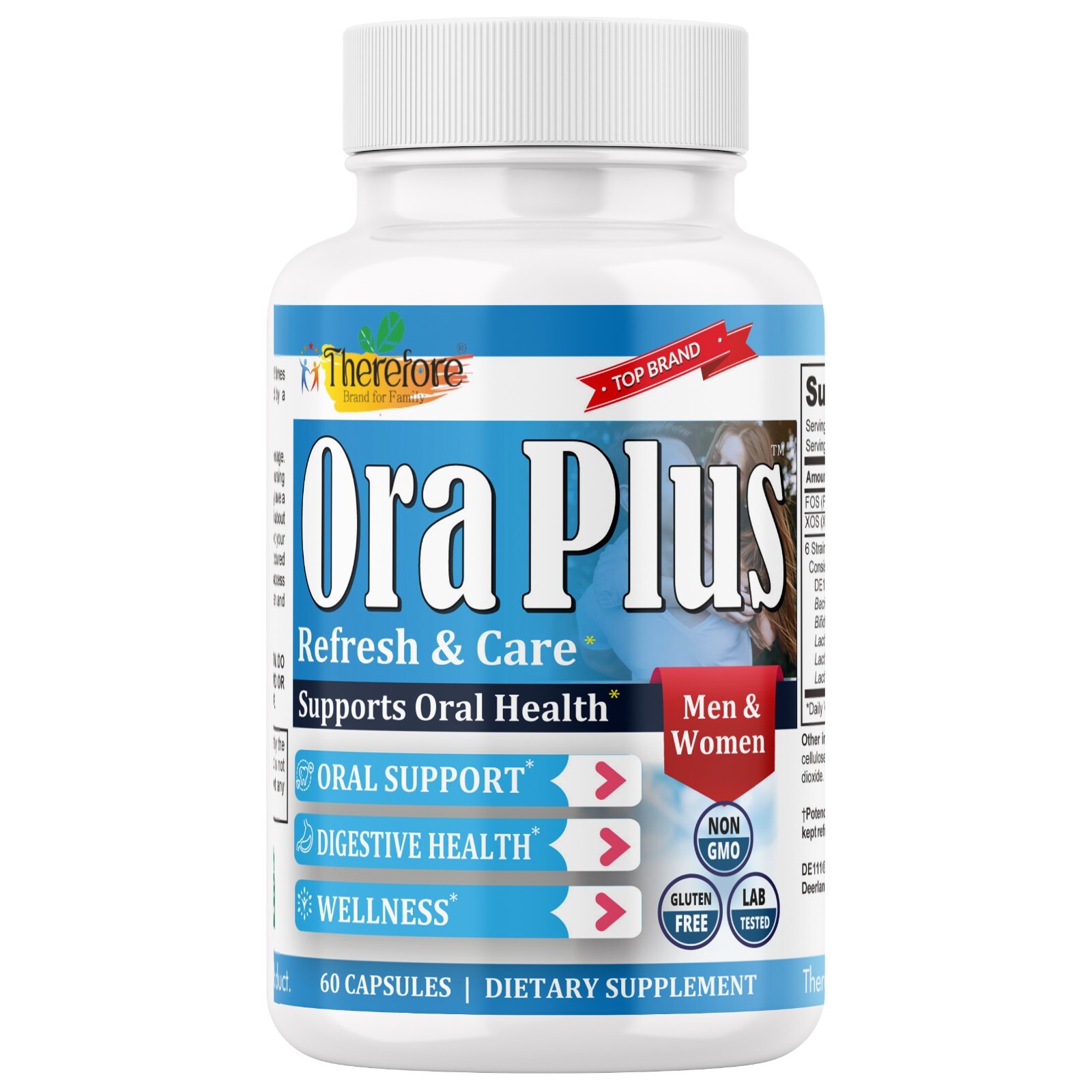 Probiotics for Bad Breath- Gut & Digestive Health Oral Support Men Women 60 Caps$22.49Last checked Nov 24, 2026View on eBay
 Sporebiotic Mega 180 Capsules Microbiome , Gut Health Probiotic Men And Women .$26.90View on eBay
 Digestion Probiotics, Gut Health Supplement with Constipation and Bloating Re...$26.95View on eBay
 Probiotics 50 Billion CFU + 10 Strains - Daily Probiotic Lactobacillus Blend Gut$28.22Last checked Nov 21, 2026View on eBay
 Pack 3 BIOMA Probiotics Digestive Health Gut Support for Man & Women 60 Capsules$48.90View on eBay
 1 – Based Probiotic for Gut Health,3PACK | Microbiome Labs MegaSporeBiotic | Spo$49.92View on eBay
 Pack 3 BIOMA Probiotics Digestive Health Gut Support for Men & Women 60 Capsules$51.90View on eBay
Highlights
- CFU counts range from 10 billion to 60 billion per capsule; clinical evidence supports 1–50 billion CFU daily for general gut support, with higher counts not inherently superior.
- Delayed-release or enteric-coated capsules survive stomach acid; spore-forming strains (Bacillus) are naturally acid-resistant and shelf-stable without refrigeration.
- Strain specificity matters: Lactobacillus rhamnosus GG and Saccharomyces boulardii have strain-level clinical evidence; generic 'probiotic blend' labels without strain codes are unverifiable.
- Prebiotic inclusion (inulin, FOS, XOS) feeds resident flora but can cause gas in sensitive individuals; multi-strain formulas (8–10 strains) generally outperform single-strain for diversity.
Best use cases
- Daily maintenance for general gut health: choose a 10–30 billion CFU multi-strain capsule with prebiotics and delayed-release coating; skip megadose 60+ billion products unless medically advised.
- Post-antibiotic recovery: pick Saccharomyces boulardii or Lactobacillus rhamnosus GG at 10–20 billion CFU, started within 48 hours of antibiotic course; avoid generic blends with no strain codes.
- Travel or unrefrigerated storage: select spore-based Bacillus strains or shelf-stable blister-packed capsules; skip probiotic gummies and refrigerated-only liquids for travel.
- Sensitive stomach or IBS: start with 5–10 billion CFU single-strain and no prebiotic fibers; skip high-CFU multi-strain with inulin/FOS which can trigger bloating.
Buying tips
- Match CFU to goal: 1–10 billion for maintenance, 10–30 billion for daily support, 30–60 billion for short-term recovery; higher counts increase cost without proportional benefit.
- Check strain codes on the label (e.g., LGG, BB-12, HN019); products listing only genus/species without strain designation cannot be matched to clinical evidence.
- Prefer delayed-release or enteric-coated capsules over standard gelatin; spore-based products need no coating and survive room temperature.
- Verify third-party testing (NSF, USP, Informed Choice) and a 'live cultures at expiry' guarantee rather than 'at time of manufacture' to ensure potency through shelf life.
Specs
| CFU Count | 10–60 billion per capsule |
|---|---|
| Strain Diversity | Single vs multi-strain (8–10) |
| Delivery | Delayed-release / spore / standard |
| Storage | Shelf-stable vs refrigerated |
Related searches
What to check before buying
- Confirm capsule count and serving size: 60 capsules at 1 per day equals a 2-month supply; 120-count packs suit multi-person households.
- Check storage requirements: refrigerated products need consistent cold chain; shelf-stable spore or blister-packed options suit humid or travel-prone environments.
- Verify allergen and dietary compatibility: look for dairy-free, gluten-free, non-GMO, and vegan capsule claims if relevant to your diet.
- Review prebiotic content: FOS/inulin/XOS can cause gas; choose prebiotic-free formulas if you have IBS or sensitive digestion.
FAQ
Data sources: eBay / Amazon listings and product attribute feeds. Updated Nov 27, 2026.
Some links on this page are affiliate links. If you buy after clicking one, we may earn a commission at no extra cost to you. This does not change which products appear here or their order. Affiliate disclosure.