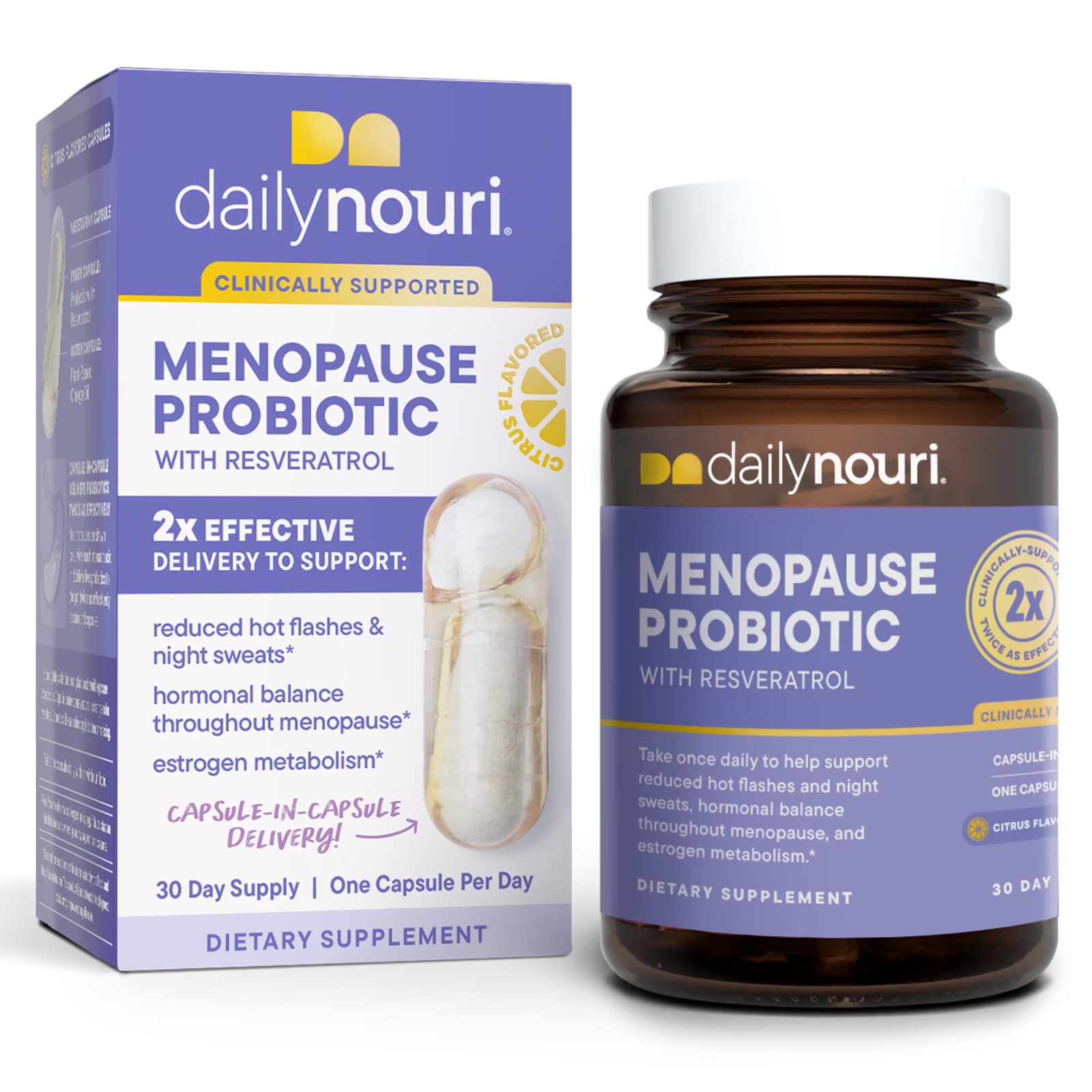

Photos from current listings. Actual item, color, and included accessories may vary.
Probiotic Menopausal Women Buying Guide
Probiotics for menopausal women combine live microbial strains with targeted support for hot flashes, bone density, and vaginal health, but the primary trade-off is strain specificity versus CFU count—high CFU does not equal menopause relief without clinically studied strains. The decision rule: choose products listing exact strain designations (e.g., Lactobacillus crispatus LBV 88) and menopause-relevant CFU ranges (10–50 billion), and skip vague 'women's blend' labels with undisclosed genera.
Key takeaways
- Clinically studied strains for menopause include L. crispatus LBV 88 for vaginal flora, L. rhamnosus HN001 for metabolic and mood support, and B. lactis HN019 for immune and bone markers.
- Effective CFU at end of shelf life ranges 10–50 billion for menopause support; higher counts (100B+) only matter if the label guarantees potency through expiry, not at manufacture.
- Vaginal-targeted probiotics often require 10 billion CFU of L. crispatus or L. jensenii, while hot-flash and bone support formulas typically pair 10–20 billion CFU with vitamin D3 and calcium.
At a glance
- Category
- Probiotics & Digestion
- Last updated
- Nov 28, 2026
Current offers
Highlights
- Clinically studied strains for menopause include L. crispatus LBV 88 for vaginal flora, L. rhamnosus HN001 for metabolic and mood support, and B. lactis HN019 for immune and bone markers.
- Effective CFU at end of shelf life ranges 10–50 billion for menopause support; higher counts (100B+) only matter if the label guarantees potency through expiry, not at manufacture.
- Vaginal-targeted probiotics often require 10 billion CFU of L. crispatus or L. jensenii, while hot-flash and bone support formulas typically pair 10–20 billion CFU with vitamin D3 and calcium.
- Resveratrol and omega-3 additives in menopause probiotic capsules are adjuncts, not primary active ingredients—verify the probiotic strains and CFU first, then treat add-ons as secondary.
Best use cases
- Best fit: perimenopausal or menopausal women with vaginal dryness or recurrent UTIs—choose a single-strain L. crispatus or L. jensenii product at 10+ billion CFU, not a broad multi-strain digestive blend.
- Best fit: women seeking hot-flash and bone-density support—pick a multi-strain formula with L. rhamnosus HN001 plus vitamin D3, and skip products that only list 'Lactobacillus acidophilus' without strain codes.
- Wrong fit: women wanting general digestive regularity—a menopause-specific formula costs more and omits digestive strains like B. coagulans; choose a standard 5–10 billion CFU digestive probiotic instead.
Buying tips
- Match CFU to target: 10 billion CFU for vaginal flora support, 20–50 billion CFU for combined hot-flash and bone support; below 5 billion CFU is underdosed for menopause indications.
- Require full strain designations (genus, species, and alphanumeric code) on the label—'Lactobacillus mix' without codes cannot be verified against clinical trials and is a compromise.
- Check delivery format: delayed-release capsules or enteric coating protect live cultures through stomach acid; plain gelatin capsules lose 1–2 log CFU before reaching the intestine.
- Prefer products with third-party potency testing (e.g., NSF or USP) and a 'potency through expiration' guarantee, not 'at time of manufacture,' which overstates live CFU at purchase.
Specs
| CFU Range | 10–50 billion at expiry |
|---|---|
| Strain Specificity | Clinically coded vs species-only |
| Delivery Format | Delayed-release vs standard capsule |
| Potency Guarantee | Through expiry vs at manufacture |
Related searches
What to check before buying
- Confirm your primary symptom (vaginal, hot flash, or bone) before choosing strain profile—single-strain vaginal products differ from multi-strain systemic formulas.
- Verify storage requirements: shelf-stable (desiccant-lined bottle) vs refrigerated—choose shelf-stable if your home exceeds 75°F or you travel frequently.
- Check supplement facts for added vitamin D3 (400–1000 IU) and calcium if bone support is a goal; skip products with proprietary blends that hide CFU per strain.
- Ensure the capsule is vegan or vegetarian if needed—many menopause formulas use HPMC or pullulan, while standard capsules use bovine gelatin.
FAQ
Data sources: eBay / Amazon listings and product attribute feeds. Updated Nov 28, 2026.
Some links on this page are affiliate links. If you buy after clicking one, we may earn a commission at no extra cost to you. This does not change which products appear here or their order. Affiliate disclosure.